
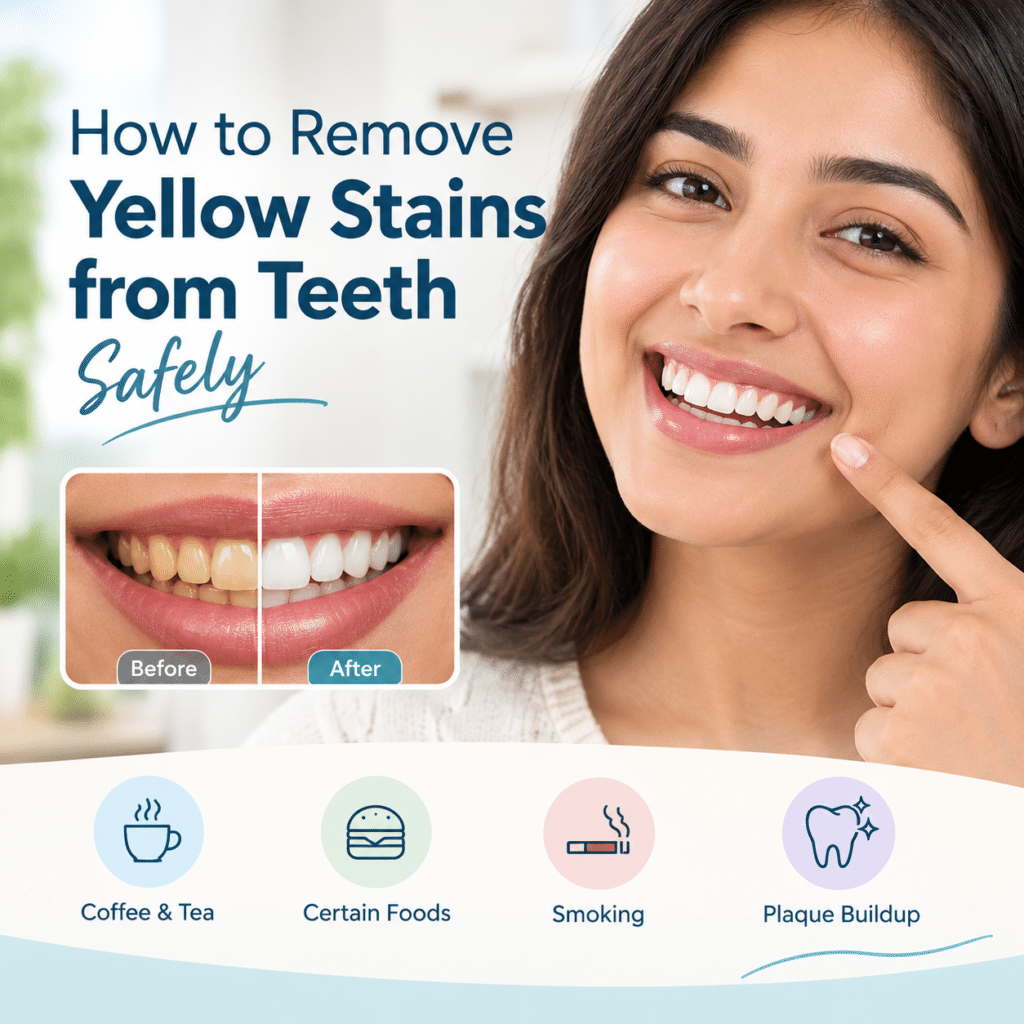
Yellow stains on teeth can develop due to coffee, tea, certain foods, smoking, and plaque buildup. The right oral care routine can help reduce stains and restore your smile. Professional teeth cleaning in Vizag helps remove plaque, tartar, and surface stains, while a dentist can recommend suitable whitening options if needed.
What Causes Yellow Stains on Teeth?
Teeth can become yellow for several reasons. Identifying the cause is the first step towards improving their appearance.
1. Coffee and Tea
Regular consumption of coffee and tea can leave stains on the tooth surface. These drinks contain colour compounds that gradually accumulate on the enamel, making teeth look darker or yellowish.
2. Plaque and Tartar Buildup
Plaque is a sticky layer of bacteria that forms on teeth. When it is not removed properly, it can harden into tartar. Tartar may appear yellow or brown and cannot be removed through regular brushing alone.
3. Smoking and Tobacco Use
Tobacco products can cause stubborn yellow or brown stains. Over time, these stains may become difficult to remove without professional dental cleaning.
4. Poor Oral Hygiene
Inconsistent brushing and flossing can allow plaque and food particles to accumulate on teeth. This buildup can contribute to discolouration and increase the risk of gum problems and tooth decay.
5. Natural Tooth Colour
Not every yellow tooth is stained. The outer layer of a tooth, called enamel, is naturally somewhat translucent. The dentin underneath has a yellowish colour. If the enamel is thin, teeth may appear more yellow even when they are healthy and clean.
How to Remove Yellow Stains from Teeth Safely
If you want a brighter smile, you do not need to start with harsh whitening products. Simple, consistent oral care is often the best place to begin.
1. Brush Your Teeth Twice a Day
Brush your teeth for two minutes, twice daily, using a soft-bristled toothbrush and fluoride toothpaste. Use gentle circular movements rather than scrubbing aggressively.
Brushing helps remove plaque and surface debris before they accumulate. However, brushing harder will not make teeth whiter and may damage the enamel or irritate your gums.
2. Clean Between Your Teeth Daily
A toothbrush cannot effectively reach every space between your teeth. Floss or use an appropriate interdental cleaner once a day to remove plaque and trapped food particles.
This simple habit supports healthy gums and helps prevent buildup in areas that are easy to miss during brushing.
3. Rinse Your Mouth After Drinking Tea or Coffee
You do not necessarily have to stop drinking your favourite beverages to maintain a clean smile. Rinsing your mouth with plain water after consuming tea or coffee can help reduce the amount of staining material left on your teeth.
If you drink acidic beverages, avoid brushing immediately afterwards. Wait around 30–60 minutes to allow your saliva to help neutralise the acids and protect softened enamel.
4. Consider Professional Dental Cleaning
Sometimes, yellow stains remain even when you brush regularly. This may happen because plaque has hardened into tartar or because surface stains have become difficult to remove at home.
A dentist or dental hygienist can perform professional scaling and polishing to remove tartar and many external stains. This treatment can make teeth look cleaner and brighter without relying on aggressive home remedies.
Professional cleaning is particularly helpful when the yellow appearance comes from deposits near the gumline or between teeth.
5. Ask Your Dentist About Teeth Whitening
If your teeth remain yellow after cleaning, professional whitening may be an option. Dentists can assess whether whitening is suitable for your teeth and gums and recommend an appropriate method.
Whitening treatments can help reduce certain types of discolouration, but they do not change the colour of crowns, veneers or fillings. Some people may also experience temporary tooth sensitivity or gum irritation.
A dental examination can help determine whether whitening is likely to give you the result you want.
Home Remedies You Should Avoid
Many home remedies claim to remove yellow stains quickly, but some can harm your teeth when used incorrectly.
- Lemon juice: Its acidity can erode enamel and make teeth more sensitive.
- Charcoal powders: Evidence of their whitening benefits is limited, and some products may be abrasive.
- Baking soda used aggressively: Scrubbing with homemade mixtures can irritate gums or contribute to tooth damage, especially when combined with acidic ingredients.
- Household bleach: Never use household bleaching products on your teeth. They can cause serious injury to your mouth and gums.
Avoid any method that promises instant whitening through harsh scrubbing or strong, unregulated ingredients.
Can Yellow Teeth Become White Again?
The answer depends on the cause of the yellow colour.
Surface stains caused by tea, coffee or tobacco may improve with professional cleaning or an appropriate whitening treatment. Yellow deposits caused by tartar usually require professional removal. However, natural tooth colour and certain types of internal discolouration may not respond to ordinary brushing or whitening products.
If one tooth suddenly becomes darker than the others, or if the colour change occurs alongside pain or sensitivity, consult a dentist rather than treating it as a simple stain.
How to Prevent Yellow Stains from Returning
Maintaining your results requires regular oral care and a few practical habits.
- Brush twice daily with fluoride toothpaste.
- Clean between your teeth every day.
- Drink water after consuming staining beverages.
- Limit tobacco use and seek help to quit if needed.
- Schedule dental check-ups and professional cleaning as recommended.
- Choose whitening products carefully and follow the instructions provided by your dentist or the manufacturer.
Remember that naturally healthy teeth do not have to be perfectly white. A slightly yellow shade can be completely normal.
When Should You Visit a Dentist?
Consider visiting a dentist if yellow stains persist despite good oral hygiene, tartar has accumulated, your gums bleed regularly, or you experience tooth pain or sensitivity.
A dentist can identify whether the discolouration comes from surface staining, tartar, enamel changes or another dental concern. This helps you avoid unnecessary whitening treatments and choose the safest approach for your smile.
Conclusion
Removing yellow stains from teeth safely begins with understanding their cause. Regular brushing, daily flossing, rinsing with water after staining drinks and professional dental cleaning can help improve the appearance of your teeth. If you need additional whitening, consult a dentist to find a suitable option.
Instead of trying harsh home remedies for quick results, focus on protecting your enamel and maintaining good oral hygiene. A clean, healthy smile is more important than achieving an unnaturally white shade.
Looking for a brighter, healthier smile? Consult a qualified dentist to understand the cause of your tooth discolouration and explore suitable cleaning or whitening options. A professional dentist can recommend the best teeth whitening treatment in Vizag based on your dental health, the type of stains, and your desired results.